

Type 6 - The Loyalist
Virgo

Type 6 Virgo (The Loyalist): Complete Personality Guide

Discover the unique personality of Type 6 Virgo. Explore how The Loyalist's core motivations blend with Virgo's earth energy for insights on strengths, challenges, career, and relationships.

Core Desire
To have security and support
Wings
6w5 / 6w7
Element
Earth
Growth Direction
→ Type 9

Overview

You can usually spot a Type 6 Virgo by the way they scan a room—and not in a dramatic, suspicious way, but in a quiet “Where are the exits? Who’s in charge? What’s the plan if this goes sideways?” way. This is the Loyalist’s core fear—being without support and guidance—filtered through Virgo’s practical, detail-focused Earth energy. So instead of panic, you often get preparation. Instead of big speeches about trust, you get a spreadsheet, a checklist, and a gently worded message asking for clarification “just to make sure.” An Enneagram 6 Virgo tends to feel like someone who is always building a safety net, knot by knot.

What makes this combination different from other Sixes is how Mercury-ruled Virgo turns anxiety into analysis. Many Sixes worry; the Type 6 Virgo worries with evidence. They notice patterns other people miss—tone shifts, missing steps, unclear expectations—and their mind instantly starts running scenarios. Not because they want control for its own sake, but because their core desire is security and support. If everything is clear, clean, and accounted for, they can finally breathe. When things are vague, inconsistent, or sloppy, their nervous system reads that as danger. This is why an Enneagram 6 Virgo can be both comforting and intense: comforting because they’re steady and helpful, intense because their brain doesn’t let loose ends stay loose.

A Type 6 Virgo is often deeply loyal, but not in a blind way. Virgo adds discernment. You’re not the kind of person who follows someone just because they’re confident; you follow the person who’s competent, ethical, and prepared. You want leaders, friends, and partners who are consistent—who say what they mean, do what they say, and can handle real life. When you trust someone, you show up in a thousand small ways: remembering details, offering practical help, catching problems early, and sticking around when it would be easier to disappear. That’s a big part of your gift: you don’t just love people—you maintain them.

At the same time, this pairing can create a particular kind of inner pressure. Virgo tends to be self-critical, and Type 6 tends to doubt. Put those together and you might feel like you’re constantly trying to prove you’re “prepared enough,” “good enough,” or “responsible enough” to deserve safety. You can be hard on yourself for having needs, for feeling anxious, or for not knowing the “right” answer. And because your motivation is to find certainty and reassurance, you may ask a lot of questions—sometimes out loud, sometimes silently in your head. The world can feel like a test you’re always studying for.

Here’s the heart of the Type 6 Virgo experience: you want life to be steady, fair, and workable. You want to trust your people, trust your systems, and trust yourself. When you’re healthy, you’re the calm voice of reason who makes plans that actually work and helps everyone feel safer. When you’re stressed, you can slip into Type 3 energy—doing more, pushing harder, trying to “earn” security through performance—and the Virgo part can make that look like over-functioning, perfectionism, and constant self-editing. Your growth path points toward Type 9: learning to soften, to settle, to trust the present moment, and to let “good enough” be truly good.
Ready to Discover Your Complete Profile?

Join 10,000+ people who've unlocked their full personality insights. Your chart is free forever.

Get Your Free Chart

Core Personality

How your mind tries to create safety (Six + Virgo in real life)

A Type 6 Virgo doesn’t just want security in theory—you want it in a form you can touch: clear plans, reliable routines, and people who follow through. Your Type 6 core motivation is to feel supported and certain, and Virgo’s Earth element tries to make that happen through practical problem-solving. If something feels unstable, your brain immediately starts asking: What’s the risk? What’s the backup plan? Who can I check with? What details are missing?

This is why the Enneagram 6 Virgo often becomes the “quality control” person in any group. You’re not trying to be negative; you’re trying to prevent avoidable pain. You’d rather ask the uncomfortable question now than deal with the crisis later. You can seem cautious, but it’s usually a form of care. Your loyalty shows up as responsibility—making sure the lights stay on, the bills get paid, the deadline is met, and everyone has what they need.

The tricky part is that your mind can confuse *preparation* with *peace*. Virgo’s Mercury keeps thinking, and Type 6 keeps scanning for threats. So even when things are fine, you may still feel like something is missing. You might reread messages, double-check your work, or look for subtle signs that someone is upset with you. For a Type 6 Virgo, reassurance helps, but consistency helps even more.

Trust, skepticism, and the “prove it” instinct

Six energy often has a push-pull with trust: you want support, but you’re wary of depending on the wrong person. Virgo adds a strong “prove it” filter. As an Enneagram 6 Virgo, you tend to trust what’s demonstrated, not what’s promised. You may respect authority, but you don’t automatically believe it. If a system doesn’t make sense, you’ll question it. If a leader is sloppy, you’ll notice. If someone’s story doesn’t add up, you’ll feel it in your body.

This can make you a powerful advocate for integrity. You can be the person who catches the inconsistency, asks for documentation, or pushes for better standards. You’re often not interested in drama—you’re interested in *accuracy*. But when you’re stressed, skepticism can harden into suspicion. Your brain may start collecting “evidence” that people aren’t reliable, that you’ll be left alone, or that you can’t relax because something will go wrong. That’s the core fear talking.

For a Type 6 Virgo, the path isn’t to become naïve. It’s to learn the difference between wise discernment and fear-based scanning. Healthy Virgo discernment is clean and simple. Fear-based scanning is exhausting and never finished.

Emotional style: practical care, quiet worry, steady devotion

A Type 6 Virgo often feels emotions through the body first: tension, tightness, restlessness, fatigue. You might not describe yourself as “emotional,” but you are deeply sensitive to instability. You notice micro-changes in tone and routine, and those changes can quietly spike your anxiety.

Your love language often looks like service: you help, fix, organize, remind, research, prepare. You may not always know how to receive care as easily as you give it. Sometimes you’d rather be the dependable one than risk needing someone and being disappointed. And yet, your core desire is support—so you can end up in a pattern where you do everything and secretly hope someone notices you’re tired.

When you feel safe, you’re warm, witty in a dry way, and surprisingly playful. Virgo can be modest, so you may not show off your humor right away. But once you trust someone, they get the full package: loyalty, thoughtful attention, and the kind of steady presence that makes life feel manageable.

Wings: 6w5 vs 6w7 in Virgo

Virgo already leans toward careful thinking, so wings really shape how your Six energy expresses itself.

If you’re a 6w5 Virgo:

  • You may be more private, self-contained, and research-driven.
  • Safety comes from knowledge: reading reviews, learning systems, understanding “how it works.”
  • You might look calm on the outside while your mind runs ten steps ahead.
  • You can be extremely competent, but also prone to isolation when stressed.

A Type 6 Virgo with a 5 wing often becomes the person who knows the policy, the process, the fine print. You can feel safer when you have expertise—and unsafe when you feel unprepared.

If you’re a 6w7 Virgo:

  • You may be more social, friendly, and quick to seek reassurance through conversation.
  • Safety comes from connection: checking in, building networks, staying plugged in.
  • You might use humor or busyness to manage anxiety.
  • You can be upbeat, but still internally vigilant.

A Type 6 Virgo with a 7 wing often looks like the “helpful organizer friend” who keeps everyone together, makes plans, and keeps things running smoothly—while also needing the plan to feel secure.

Both wings share the same core: you want to know you’re not alone, and you want life to make sense.

Strengths

1) Practical loyalty you can actually count on

A Type 6 Virgo isn’t loyal in a vague, sentimental way. You show loyalty through consistency. You’re the person who remembers the appointment, follows up, brings the extra charger, and checks that everyone got home safe. When you commit, you mean it.

This is a special kind of devotion: steady, grounded, and protective. People often feel safer around an Enneagram 6 Virgo because you don’t disappear when life gets inconvenient.

2) Risk awareness that prevents real problems

Some people call it “worry.” But when you’re balanced, your vigilance is a gift. A Type 6 Virgo can spot weak points before they turn into disasters: unclear timelines, missing details, unrealistic budgets, unreliable people.

Virgo’s analytical mind gives your Type 6 instincts a useful shape. You don’t just feel uneasy—you figure out why, and you suggest a fix.

3) High standards rooted in care, not ego

Virgo wants things done well. Type 6 wants things done safely and correctly. Together, that often creates a person who takes pride in quality. You want the product, the plan, the relationship, or the home to be stable and functional.

As an Enneagram 6 Virgo, your standards usually come from love: “I want this to work.” When you’re healthy, you can communicate those standards without shaming yourself or others.

4) Thoughtful problem-solving under pressure

A Type 6 Virgo can be surprisingly calm in a real crisis, especially if you’ve prepared. Your brain is already familiar with worst-case scenarios, so when something goes wrong, you often shift into: “Okay. Here’s what we do.”

This makes you an anchor in emergencies—someone who can triage, prioritize, and handle the details without spiraling (as long as you don’t feel alone).

5) Deep integrity and respect for what’s right

Virgo’s moral cleanliness plus Type 6’s loyalty often creates strong ethics. You care about doing the right thing, keeping promises, and being fair. If something feels dishonest or irresponsible, it bothers you.

A Type 6 Virgo often becomes a guardian of standards—someone who protects clients, family, or coworkers from sloppy or harmful choices.

6) The ability to improve systems (not just criticize them)

You’re not only good at noticing what’s wrong—you’re good at making it better. A balanced Enneagram 6 Virgo can streamline processes, tighten routines, create checklists, and build repeatable systems that reduce stress for everyone.

This is Earth energy at its best: taking something chaotic and making it livable.

7) Quiet emotional intelligence

You may not be flashy about feelings, but you’re often tuned in. A Type 6 Virgo notices when someone’s mood shifts, when a friend is overwhelmed, or when a partner is holding back.

Because you value reliability, you also value emotional consistency. You’re good at creating steady emotional environments—clear communication, practical support, and gentle accountability.

8) Humility that keeps you learning

Virgo’s modesty and Type 6’s self-questioning can be painful when extreme, but in healthy form it makes you teachable. You’re willing to improve, ask questions, and admit when you don’t know.

A Type 6 Virgo often becomes highly skilled over time because you don’t assume you’ve “arrived.” You keep refining.

9) Strong devotion to community and teamwork

Many Type 6 Virgo people shine in groups because you understand roles, responsibilities, and shared safety. You’re the one who keeps the team grounded: “What’s the plan? Who’s doing what? What do we need to watch for?”

You’re also often the person who protects the underdog, because you hate unfairness and you don’t like seeing people unsupported.

10) Grounded self-discipline

Earth signs tend to be steady builders, and Virgo especially loves routines that work. When a Type 6 Virgo decides something matters, you can practice, train, save, study, and follow through.

This discipline becomes a life superpower when it’s paired with self-compassion. Then you’re not just “responsible”—you’re resilient.

Challenges & Growth Areas

1) Overthinking that steals your peace

For a Type 6 Virgo, overthinking usually starts as an attempt to feel safe. If you can analyze the situation enough, you hope you’ll find certainty. But the mind can become a treadmill—especially with Virgo’s Mercury spinning and Type 6 scanning for risk.

Growth move: set “decision deadlines,” limit research time, and practice choosing with 80% certainty. Remind yourself: safety isn’t only found in perfect information.

2) Perfectionism as a form of fear

Virgo can push for “better,” and Type 6 can fear the consequences of mistakes. Together, you may feel like errors are dangerous, not human. You might over-edit, delay, or avoid starting because you want it to be right.

Growth move: practice “minimum viable effort” on low-stakes tasks. Let small things be imperfect on purpose. Your nervous system needs proof that imperfection doesn’t equal abandonment.

3) Reassurance seeking that never fully satisfies

An Enneagram 6 Virgo may ask for clarity, confirmation, and repeated check-ins. But if the underlying fear is “I’ll be unsupported,” reassurance can become endless.

Growth move: notice when you’re asking for reassurance versus asking for real information. Try self-reassurance scripts: “I can handle uncertainty. I can ask for help if I need it.”

4) Suspicion and testing people

When trust feels shaky, a Type 6 Virgo might test others: subtle questions, checking consistency, watching for contradictions. This can protect you—but it can also strain relationships.

Growth move: communicate needs directly. Replace testing with clarity: “Consistency helps me feel safe. Can we talk about what we can expect from each other?”

5) Stress arrow to Type 3: proving your worth through performance

Under stress, Type 6 moves toward Type 3 patterns: doing more, achieving more, trying to look composed and capable. For a Type 6 Virgo, this can look like overworking, micromanaging, and tying safety to productivity.

Growth move: track rest like you track tasks. If you’re chasing approval, pause and ask: “What am I afraid will happen if I slow down?”

6) Difficulty relaxing into the present

Virgo tends to live in improvement mode, and Type 6 tends to live in anticipation mode. The result: you may struggle to feel fully “here,” even during good moments.

Growth move: this is where your growth arrow to Type 9 matters. Practice settling: slow walks, body scans, single-tasking, and letting today be enough.

7) Self-criticism and harsh inner language

A Type 6 Virgo can be incredibly kind to others and surprisingly strict with themselves. You may interpret anxiety as weakness or mistakes as moral failure.

Growth move: talk to yourself like you’d talk to a friend you’re protecting. Self-trust grows through kindness, not constant correction.

Career & Work

Ideal work environments for a Type 6 Virgo

A Type 6 Virgo thrives where expectations are clear and competence matters. You tend to do best in workplaces with:

  • Predictable routines and reliable leadership
  • Strong ethics and accountability
  • Training, documentation, and clear processes
  • Teamwork where people actually support each other

You’re often at your best when you can prevent problems, improve systems, and be recognized for being steady—not just flashy.

Work style: how you naturally operate

As an Enneagram 6 Virgo, you typically work like a careful builder:

  • You plan before you act.
  • You double-check details.
  • You communicate risks early.
  • You prefer honest feedback over vague praise.
  • You want to know who owns what, and what success looks like.

If you’re a 6w5 Virgo, you may prefer independent work blocks, deep focus, and expertise-based roles.

If you’re a 6w7 Virgo, you may enjoy client-facing work, team coordination, and roles with variety—while still wanting structure.

Careers and job titles that fit (with why)

Here are roles that often match the strengths of a Type 6 Virgo—practical, careful, service-oriented, and responsible:

1) Project Manager — you track details, timelines, and risks.

2) Operations Coordinator / Operations Manager — you improve systems and keep things running.

3) Quality Assurance (QA) Analyst — your eye for errors is a superpower.

4) Compliance Specialist — you care about rules, ethics, and safety.

5) Auditor — you verify accuracy and protect integrity.

6) Accountant / Bookkeeper — steady routines + precision.

7) Financial Analyst (risk-focused) — you’re good at “what if” thinking.

8) Data Analyst — Virgo loves patterns; Type 6 loves certainty.

9) Technical Writer — clear documentation reduces chaos.

10) Healthcare Administrator — structure + service.

11) Nurse (especially triage, OR, or case management) — practical care under pressure.

12) Pharmacy Technician / Pharmacist — precision and responsibility.

13) Clinical Research Coordinator — protocols, details, ethics.

14) Teacher (especially structured subjects or special education support) — reliability and care.

15) School Counselor / Academic Advisor — guiding others with practical support.

16) Human Resources Generalist — policy, fairness, consistency.

17) Recruiter (structured, values-based) — matching people responsibly.

18) Customer Success Manager — proactive support and follow-through.

19) IT Support / Systems Administrator — troubleshooting and prevention.

20) Supply Chain Planner — contingencies, logistics, and reliability.

A Type 6 Virgo often finds satisfaction in being essential—not necessarily in being center stage.

Industries that often feel “right”

Many Enneagram 6 Virgo people do well in industries where reliability matters:

  • Healthcare and public health
  • Education and academic support
  • Government, policy, and public administration
  • Finance, insurance, and risk management
  • Technology (especially infrastructure, security, QA)
  • Nonprofits with clear operations
  • Legal support, compliance, and regulatory work

Virgo likes usefulness. Type 6 likes stability. So jobs that feel meaningful *and* structured tend to be the sweet spot.

Leadership style: the guardian manager

As a leader, a Type 6 Virgo is often protective and steady. You tend to:

  • Set clear expectations
  • Notice risks early
  • Advocate for training and support
  • Keep standards consistent

Watch-outs: under stress (Type 3 direction), you might overwork, become overly image-focused, or push your team too hard because you’re scared of failure.

What to avoid (or at least approach carefully)

A Type 6 Virgo usually struggles in environments that are:

  • Chaotic with unclear roles
  • Emotionally unpredictable leadership
  • “Move fast and break things” cultures without safeguards
  • Heavy on office politics and vague performance metrics
  • Built on constant last-minute changes

You can adapt, but it will cost you energy. Your nervous system does best when the workplace doesn’t require you to be on alert all day.

Relationships

Dating and romantic love: loyalty with a checklist (and a soft heart)

A Type 6 Virgo tends to approach love seriously. You’re not usually looking for fireworks without follow-through. You want character, consistency, and a sense that this person can be part of a stable life.

You may take time to trust. Early on, you might watch how someone handles small responsibilities—being on time, keeping promises, owning mistakes. That’s not you being picky for fun; it’s your core fear looking for reassurance that you won’t be left unsupported.

What you need from a partner

An Enneagram 6 Virgo typically needs:

  • Consistency (words matching actions)
  • Clear communication (no mind games)
  • Practical teamwork (shared responsibilities)
  • Emotional steadiness (repair after conflict)

You do best with people who don’t shame your anxiety, but also don’t feed it. The best partners help you reality-check while staying kind.

Communication style: precise, thoughtful, sometimes worried

A Type 6 Virgo often communicates with detail. You may ask specific questions and want specific answers. Vague responses can feel like danger.

When you’re anxious, you might become critical or hyper-focused on what’s wrong. A growth move is to name the feeling under the detail: “I’m feeling unsure and I need clarity,” instead of “You didn’t do it the right way.”

Friendship: the dependable one (who secretly wants to be cared for too)

As a friend, a Type 6 Virgo is the person who shows up. You remember birthdays, check in, and help people get through hard seasons. You may keep your own struggles private, though, because you don’t want to burden others.

Growth here often means letting trusted friends support you. Your loyalty deepens when you allow yourself to be human, not just helpful.

Family dynamics: responsibility can become a role

Many Enneagram 6 Virgo people become the “responsible one” in the family—organizer, mediator, fixer. You might carry mental loads that others don’t even see.

Your arrow to Type 9 is important in family relationships: practicing calm presence, letting others handle their own responsibilities, and resisting the urge to manage everyone’s emotions.

Compatibility notes (Enneagram-focused)

Compatibility depends on health level, but here are common dynamics for a Type 6 Virgo:

  • With Type 9: soothing, grounding, and healing—if you don’t do all the worrying for both of you.
  • With Type 1: shared values and standards; watch rigidity and criticism.
  • With Type 2: supportive and caring; watch over-giving and unspoken expectations.
  • With Type 5: strong mental connection; watch emotional withdrawal and isolation.
  • With Type 7: they bring lightness; you bring stability—watch mismatched risk tolerance.
  • With Type 8: you may admire their strength; watch control dynamics and harshness.

In any pairing, the healthiest version of a Type 6 Virgo learns to ask directly for reassurance, set clear agreements, and practice inner calm instead of constant scanning.

See How You Connect With Others

Create your free personality chart and unlock compatibility insights with anyone.

Get Your Free Chart

Personal Growth

The big growth theme: from vigilance to grounded trust (Type 6 → Type 9)

For a Type 6 Virgo, growth isn’t about becoming careless. It’s about becoming *settled*. Type 9 energy invites you to relax your grip, soften your nervous system, and trust that you can handle life as it comes. You’re still wise and discerning—just not constantly braced.

Think of it like this: your mind wants certainty, but your soul wants steadiness.

1) Build self-trust in small, repeatable ways

A powerful practice for an Enneagram 6 Virgo is proving to yourself that you can handle things.

  • Keep small promises to yourself (walks, meals, bedtime routines).
  • Practice making a decision without over-researching once a day.
  • Write down past situations you survived—even when you were scared.

Self-trust grows from evidence, and you’re great with evidence.

2) Calm the body to calm the mind (Virgo needs nervous-system care)

Because a Type 6 Virgo often lives in their head, body-based calming is essential:

  • 5-minute breathing practice before checking messages
  • Gentle strength training or yoga for grounding
  • Long walks with no podcast (let your mind settle)
  • Progressive muscle relaxation at night

Your goal isn’t to eliminate anxiety; it’s to teach your body that the present moment can be safe.

3) Replace reassurance loops with clarity agreements

Instead of repeatedly asking, “Are we okay?” try building simple agreements:

  • “If something’s wrong, we’ll talk within 24 hours.”
  • “We’ll confirm plans the day before.”
  • “If you need space, you’ll say so directly.”

A Type 6 Virgo does well when expectations are explicit. You’re not needy for wanting clarity—you’re wired for stability.

4) Practice ‘good enough’ as a spiritual discipline

Perfectionism is often fear wearing a neat outfit. For a Type 6 Virgo, “good enough” can be healing.

Try:

  • Submit the email without rereading it five times.
  • Leave one minor chore undone and notice nothing collapses.
  • Choose the “good” option instead of the “perfect” option.

This teaches your nervous system that mistakes don’t equal abandonment.

5) Work with your stress arrow (Type 3) consciously

When you feel yourself sliding into Type 3 stress—overworking, image-managing, proving—pause.

Helpful actions:

  • Ask: “Am I trying to earn safety right now?”
  • Do one thing that’s restorative before doing the next task.
  • Share the load instead of becoming the hero.

A healthy Enneagram 6 Virgo doesn’t need to be impressive to be secure.

6) Reflection questions (journal-friendly and specific)

Use these to gently unwind fear-based thinking:

1) “What exactly am I afraid will happen?”

2) “What evidence do I have for that fear—and what evidence do I have against it?”

3) “What would I do if I trusted myself 10% more today?”

4) “Where am I confusing control with safety?”

5) “What support am I allowed to ask for directly?”

6) “What would ‘peaceful competence’ look like this week?”

Actionable practices list (15+ you can actually do)

Here are practical growth tools that fit the Type 6 Virgo brain:

1) Set a 20-minute “worry window,” then close it.

2) Use a decision rule: “If it won’t matter in 6 months, decide in 6 minutes.”

3) Make a two-column list: *Control* vs *Influence*.

4) Create a calming “reset routine” (tea, shower, walk, music).

5) Practice single-tasking for 10 minutes daily.

6) Do a weekly planning session—then stop planning.

7) Share one fear with a trusted person without seeking immediate reassurance.

8) Replace “What if…” with “If that happens, I will…”

9) Keep a “things that went right” log.

10) Practice saying: “I need clarity,” instead of hinting.

11) Schedule rest like an appointment.

12) Try guided meditations focused on grounding (Type 9 integration).

13) Choose one area to simplify (closet, calendar, finances).

14) Practice receiving help without correcting how it’s done.

15) Limit doom-scrolling and late-night researching.

16) Create a bedtime brain-dump page so your mind can release.

A Type 6 Virgo becomes truly powerful when you realize: you don’t have to predict every storm to be safe. You can build a steady inner home—one calm choice at a time.

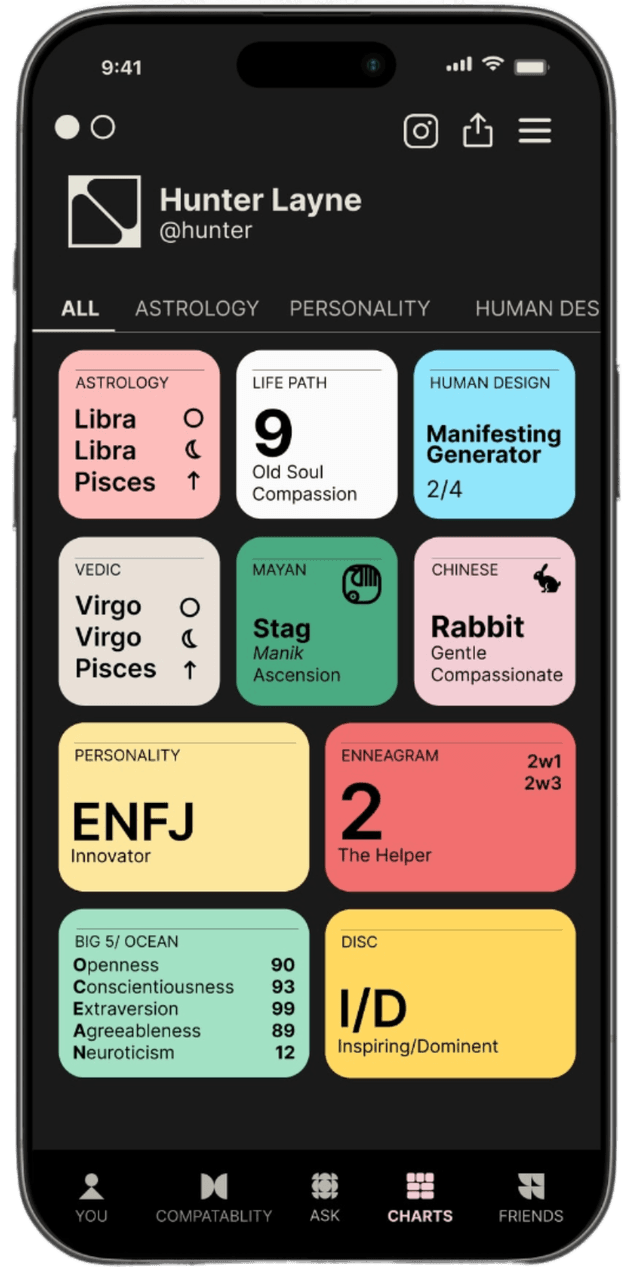
Mirror personality chart example showing MBTI, astrology, enneagram and more
✨ Trusted by 10,000+ users

Get Your Complete Personality Chart

Discover your full personality profile combining MBTI, astrology, enneagram, and 10+ other systems. Your chart is completely free, unlock AI insights and compatibility analysis with Mirror Pro.

⚡ Takes 2 minutes
🔒 100% Private
📊 Free Forever
✨ Pro features available

Explore Related Types